Wednesday, July 8, 2015

Sermon for Kansas City Mennonite Convention

During the Kansas City convention this past week, I was invited to preach a sermon at the contemplative service on Saturday evening. After a long week, full of many different emotions, I felt called to reflect on the consequences of our actions, and the pain in the midst of our church community. Here is basically the text of my sermon.

Sermon for convention
http://mennoniteusa.org/news/delegates-grapple-with-israel-palestine-resolution/
this is a picture of my delegate table. You can see a bit of the back of my head.
Good evening friends, it is good to gather in this service of contemplation and worship this evening.
We have come to the last night of convention. Tomorrow, we return home. Back to the usual rhythms of life, whatever those might look like for you. Janeen did a wonderful job expressing some of the emotions that you may have brought to this space this evening-joy and exhaustion and grief and hope and all the rest.

For me, I'd like to start with a confession. I have wept more this week than I have in any week since my father died 6 years ago. I have felt the pain because of the choices of the church and how we treat one another. So I have a simple prayer for my sermon this evening. I pray that I might not cause any more pain in this service.

So with that, lets turn to the scripture text. We've been working through the story of Luke 24, the Emmaus Road. We've reflected about being on the way together. And Janeen, as she planned this service months ago, thought, since it's the last night of convention, it might be good to reflect on the end of our passage, and to talk about what happened after Cleopas and his friend dashed back to the city of Jerusalem, where Jesus, equally fleet of foot, came to the disciples gathered together in the upper room.

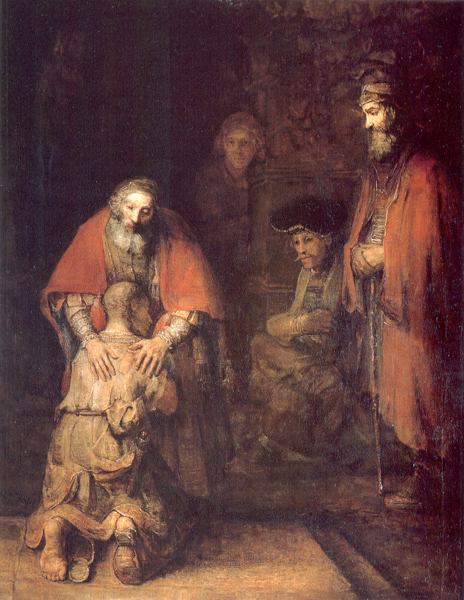
There is much to chew on here-the disciples with their disbelieving joy, the traditional “Shalom Alchem”, “Peace Be With You” greeting, Jesus eating the fish so resonate of the feeding of the 5000, and the nets left by the sea, the scriptures opened a second time to explain the journey that the Messiah had to take. But what caught me when I read this text months ago, and where I want to draw you as well is to the hands and feet that Jesus showed to his disciples. It's an ancient tradition to contemplate the wounds of Christ. To reflect on the pain of our savior.

Sunday, January 11, 2015

SLMF 40th Anniversary Sermon

Matthew 13:52


Good morning friends,
it is good to gather in worship with all of you today!
I hope that this Sunday morning finds you well!
We have a special occasion today-
Today, as you know, we are celebrating the 40th anniversary of the founding of the St. Louis Mennonite Fellowship, our little congregation here. It was in January of 1975 that a small group gathered in Edgewood Children's center for the first worship service of a new congregation.

This is the first of at least two events LCG has planned this year to acknowledge this milestone. We're also hoping to invite back parts of our family who have moved away in a more formal weekend of celebration later in the spring.

It's an important part of the rhythm of life to mark these kind of anniversaries, to engage our memories and connect with the things that have gone before, to remember that we are part of something a lot bigger than just a momentary community-we are part of a great cloud of witnesses, part of an institution built before us and that will last beyond us.

Our scripture text this speaks to the value of both remembering our history and claiming our new directions. After telling a bunch of parables, like the one about the farmer who goes out to sow his field, and throws the seed in different kind of ground, and the one where he talks about the weeds in the field that are left until harvest, Jesus asks his disciples who have heard these stories to commit themselves to bring treasures both new and old out of the storehouse.

That I think is the heart of the gospel-to tell an old old story in a new way for a new community. And I think that this is one of the really special things we get to do at anniversary celebrations-these moments like this Sunday give us an opportunity to bring out treasures that are special occasion things-the fine china, the heirloom pieces, and give them a day in the sun. This is an opportunity to turn aside from the novel, and focus on the core things that make us who we are. And in the same way that birthdays or wedding anniversaries give us the opportunity to celebrate those that we love, and in the very act of celebrating them, remember why we love them, so too are we called to remember today where we have been so that we have a better sense of where we are going.

Friday, September 19, 2014

Forgiveness is tricky Genesis 50:15-21, Romans 14:1-12, Matthew 18:21-35

Greetings
Good morning friends!
It is good to gather in worship with all of you this Sunday. I am feeling pretty energized today-it's been an exciting week! I spent the last two days listening to inspiring preaching and powerful teaching about the structures of racial discrimination and institutionalized violence in our society. It was a stretching experience- challenging both to my way of life that comfortably enjoys the privileges of my whiteness, and also to listen to people who sometimes said things that I really really disagreed with, with some conspiracy theories and pseudo-scientific nonsense, but I come away inspired to continue the work of social transformation in a country that has not yet overcome it's sinful and shameful history.
Equally, I had a wonderful time at retreat last weekend, and I hope that those of you who made it out were also blessed by the cool weather, the good company, and Roland Kuhl's reflections on the church as a mosaic and a parable that God is speaking into the world.
We have some work ahead of us, collecting and collating the conversations we have had over the last couple of months and turning them into a direct kind of proposal for the congregation, and that is work we are going to do. But I decided a week or two off from visioning will be good for me, and probably for all of you as well.

Forgiveness is important.
So lets talk about forgiveness. We have before us powerful stories-
Joseph, reunited with his brothers after they betrayed him and sold him into slavery.
Paul, encouraging people at each other's throats fighting over essential theological differences to get along.
And Jesus, encouraging us to forgive seventy-times seven times. (or 490, for those of us who do not have quite as much poetry in their souls).

And the Bible is full of these kinds of powerful stories of forgiveness. Jacob, reunited with Esau, The Prodigal Son are all stories of people reuniting with one another. And even more are the stories of God's forgiveness- The Old Testament can be summed up as a story of the people abandoning God, experiencing the consequences, repenting and asking for forgiveness, and being restored to the beloved community. Jesus again and again told the people that he healed “your sins are forgiven”, often without them ever vocalizing the request. And on the cross he asked God, “Father forgive them, for they know not what they do”.
So this is something that we have to talk about.

Monday, September 1, 2014

Sermon for August 31

Good morning friends!
It is good to gather in worship with all of you this Sunday.
I hope that this day finds you well, and that you are enjoying the three day weekend. Tomorrow I hope that you take time to honor labor day. It is a good chance to remember the value of work, and the meaning it creates in our lives, to remember the struggles of workers through history who have fought for humane treatment from their employers and won things like paid vacation, holidays, and regulated work weeks, to consider the work yet to be done in improving conditions for workers, like better parental leave, and to pray for those who are not able to find work, or are not paid a reasonable wage for their efforts.

This is the last Sunday in our sermon series about visioning, before our retreat next weekend. I'm excited about gathering with all of you to talk about our work together with Roland Kuhl! It's going to be a fun weekend, hopefully not too hot, and filled with good friends and good conversation.

Friday, August 29, 2014

Seven Priorities Results

Hello friends,
I wanted to share with you the results from our conversation last Sunday.
I'll summarize these in my sermon on Sunday, but I felt like our thoughts centered on three subjects, with some great ideas that didn't fit in the larger three. If you don't see your thoughts represented here, let me know.
One thing I notice- we have some energy for the things that we hired Jennifer for, which I find very exciting!
If you have thoughts about how I've grouped these, or what might be missing, I'd love to know

Sunday, August 24, 2014

7 Priorities for the Church

Good morning friends,
it is good to gather in worship with you this morning!
Today we are picking up where we left off a couple of weeks ago, working through some questions of church vision on our way to retreat. By the way, have you signed up for retreat yet? Jennifer has the sign up sheet for this Sunday, and we'd love to get names nailed down this Sunday so that we can get meals formalized!

This morning, we're moving from examination to evaluation, from what is to what might be. For the next two weeks, I'd like to think about what we might want to do differently as a congregation, and the question for you at the end of the sermon today is this: “are there ways you'd like to see us live out our missional priorities better?”
Or, I put it in my original outline, “What are we called to do?”

The vehicle I want to use to help us consider this question is the Purposeful Plan for Mennonite Church USA. Mennonite Church USA over the last several years has been working on it's own strategic plan-a list of what we want to do, and why. I really enjoy this document, and the whole thing is available on the web if you're interested-it's enough for a serious book study. I won't try and go through the whole 25 pages! Instead, there are two parts I want to use for our reflections over the next two weeks. Today, we're going to reflect on the 7 priorities that the Mennonite Church has chosen for itself, the sense of the larger tasks where we ought to be putting our time and energy. Next week we're going to think a little bit about process, rather than content, and look at 12 traits of a Missional Congregation, and reflect on how we live those out in St. Louis. I'm hoping that these tools might help us as we think about what we might want to do together.

Tuesday, August 19, 2014

Prayers for Ferguson

Good morning friends.
It is good to gather in worship with all of you this morning.
I had a whole different sermon planned for this week, and it's mostly written, but you're not going to get to hear it until next week, when we'll pick up our conversation about visioning. I decided that it was better to talk about the events in Ferguson.

I decided to change directions after one of those odd little God moments that sometimes happen.
On Thursday evening I was here at church, rather than at the protest march in Ferguson, where I really wanted to be, because we hosted a wedding here yesterday, and I was making sure everything was set up for the rehearsal, and I locked up after they were done. I was a little grumpy about it, you know that kind of 'hrumph, I could be doing something socially active and more useful, or at least hanging out at home with Rachel and Jonah' kind of feelings.

But before we got started, the bride, Deneen, pulled me aside, and thanked me for being a gracious host. She said that it had been a hard week, and I asked her why, and she explained that some of her good friends lost a son in Ferguson over the weekend. She wondered if I had heard of Michael Brown.

So I learned that she knows the Brown family well. That she had to shut down her Facebook account this week, because of how much stress it was causing her on her wedding week, and how much she hurt for her friends. And I was reminded that we are connected, in unexpected ways with one another. And it was pretty clear at that point were I was supposed to be for the evening. And I am honored that we all, the St. Louis Mennonite Fellowship, were able, in our own small way, to be of comfort to someone in need. A privilege we were given because we have been willing to inconvenience ourselves, and open our building to the community where we live, even when it's a bother.

Faced with a world with so much violence and pain, it is important for all of us to inconvenience ourselves for the sake of the Gospel.

So this morning, I want to lift up Ferguson, and the city of St. Louis, and the police departments of our city and our county, and reflect on who we are called to be and what we are called to do in these times of unrest and concern, and to invite God's presence in to our hearts today.

Sunday, August 10, 2014

How did we Get Here?

Deuteronomy 6:4-9
Isaiah 46:9-11
Good morning friends!
It is great to gather in worship with you all, I hope that this Sunday morning finds you well.
We're in week 3 of our summer sermon series about our common vision as part of the SLMF community, as we're trying to think about who we are, and where we are going.

Last week, you may remember, we talked about who we are as a congregation-
how we live out our calling to be disciples of Jesus Christ, in our own lives, in the church community, and in the world in which we live.

We had the opportunity to talk a little bit about what works for us at SLMF, and what works a little less well, and those conversations are already bearing fruit-you might notice a more significant introduction for our guests, Peter and Liz, and Ganesh and the Nepali praise group in the bulletin, which came from a request for more details and a warmer written welcome for the people who come join us in worship.

If you have other things you'd like to share, or particular thoughts that have sprung up, let me know!

Today, we're talking about history.
One of my two majors in undergrad was history, so I'm a big believer that it is in the stories of our past that we learn about where we should go in the future. The successes and mistakes that we make shape who we are, and are the best instructors going forward.

This is a deeply Biblical idea as well. The Bible is a history book-the story of God's relationship with the people of Israel over many generations. And we are all called to remember that history, to tell it well. To write it on the door posts of our houses, and on our gates, as our text this morning phrases it.

The question I will be asking you in a couple of minutes is this: how did you get to SLMF? And what stories do you want us to remember?

But before we get there, I want to tell the story of the Saint Louis Mennonite Fellowship.

Sunday, August 3, 2014

Who are We, Right Now?

Sermon
Good morning friends!

This Sunday, we're on week two of reflecting on our congregational vision. Last week, you may remember, I reflected on our task: evaluating the ways we are spending time and energy, and see if there are things we should be doing differently, new things we might try, and old things we might let go. We aren't going to try and reinvent SLMF, but we are going to try and talk together about who we are, and who we might be in the next couple of years.

We are focusing on 5 questions in the next 5 weeks.
1) Who We Are Right Now?
2) How did we Get Here?
3) How should we be?
4) What should we do?
5) And finally, How can I help?

Today, I want to reflect on who we are right now.
Church scholars often talk about a congregation's 'lived theology'-how the things we say and do communicate our understanding of God's will. I picked this passage from James, because I think he captures so well that understanding that our actions demonstrate our beliefs.
The lived theology project, based off of Detrick Bonhoffer's work, phrases it this way:
“properly interpreted, the lived experiences of faith are communicative not only of a religious community’s collective self-understanding but of modes of divine presence as well.”  (http://www.livedtheology.org/overview/)
In other words, our actions express what we believe, and they express the image of God in our midst.
So that's what I'd like to engage for us this morning-who do we say God is when we gather? What kind of community are we? What do we believe in?

But before jumping in-a caveat or two. These are just my observations, and they are brief. You will have your own, which you will get to share at the end of my sermon. We will divide into groups of 2 and have short conversations with one another as well. Also, I offer these purely as observations, and basically positive ones! I promise that I'm coming with the perspective of 'look what these beloved children of God have created here!' not with any major concerns about who we are as a congregation. No church can do everything well, and there are strengths and weaknesses to all our choices. I want to describe what is, today.

Anyway, with that start, what is our lived theology?
Lets start with our membership covenant. This is a document that each member of the congregation signs every year, as a way of claiming participation in our little community. The covenant doesn't fully encapsulate who we are, but I think it's a good way to start.

At a very meta level, having a membership covenant says 'membership is not a one time commitment-membership is a regular ritual, a daily choice to be part of this community.' Our covenant speaks to the Anabaptist value of choice. SLMF is a community of people who gather on purpose. Our membership covenant also speaks to a bit of a rebellious streak-a willingness to experiment in church structure, embracing being a little different than the most traditional of church structures.

I notice our consensus decision making process here too. For those of you who aren't familiar with it, our congregation does not vote. At congregational meetings, we have a consensus process, where proposals come from Committees through the LCG, and then at a whole congregation gathering, we test the spirit of the room, allowing every person to speak into the proposals that are brought to the floor if they choose, and giving each member the authority to break consensus, and send things back for more discernment. This speaks to a high level of trust in one another, and a commitment to a 'different' way of being church.

But I shouldn't get stuck at the meta level! Within the document, we outline three tasks for the church member-personal discipleship, faith community discipleship, and earthly community discipleship.
We might call it a three-fold calling, and we try to practice each of these goals.

Tending our personal relationship with God is the focus of our primary collective practice: Sunday morning worship. Like most churches through most of history, the most significant way that we are visible is by gathering here, on Sunday morning, lifting our voices in prayer and praise.

Our worship does a lot of work-we have a blend of music styles, both traditional hymns and newer music, but little contemporary praise music, aiming to serve a number of traditions. We use volunteer music leaders, worship leaders, scripture readers, and actors, which means that participating in worship is part of how we practice spiritual development. But that also means a low formality service, and the 'flow' is not as clean as in some church styles. We have more talking, by a lot of different people, which speaks to a commitment to full participation. We have some significant rituals-communion, child dedication, baptism, that focus on our relationship with God.

Christian Education is the other way we work on personal discipleship, seeking to encourage adults and children in their walk with Jesus.
Our children's activities are significant. Our Sunday School program takes the time and energy of about 1/3 of our adult members, and worship is very much open to children-we have Children's time, a children's Christmas program, and a high congregational tolerance to background noise. At the same time, it means that for the most part, church is only a limited respite for parents-it's a a time to keep track of young ones, to teach Sunday School, to be fully engaged in the parenting world. One of the things I want us to consider is how we do this important work well.

I also notice that there are not many activities outside of Sunday morning focused on personal discipleship-our small groups generally do not explicitly engage faith formation, and while I know many of us have personal devotional practices, like the Rejoice Daily Devotional that MennoMedia puts out, or other prayer and Bible study practices, we don't really have collective efforts in that direction.

So I am curious how you practice your personal relationship with God, and whether you feel like we are doing a good job of faith formation together.

The second step is faith community discipleship-our relationships with one another.

Here I think of the work of Hospitality committee-regular potlucks, Guess who's coming to dinner, play group for kids, wedding showers, baby quilts, and other social events. I also think about pastoral care-LCG members who write notes to people in need, our visitation ministries, and the congregational prayer every Sunday. It is not unique to our congregation to have a congregational prayer every Sunday, where we share our joys and concerns with one another, but it is a significant marker that we care about personal relationships within the church.
I think of our church retreat-we take a weekend every year to gather together, and our church retreat has a higher attendance percentage of any church I know of-we are invested in being together.
I think of our organizational system itself-the finance committee and building committee that have put so much energy into making sure that the structure of the church flourishes. We have a style of 'informal professionalism' where the systems are designed to serve us well, and stand the test of time, but are pretty flexible, and we sometimes discover things that have fallen through the cracks.

This kind of community is something that we have put some energy into in the last year, between Midweek Mennos, a prayer E-mail chain, and small groups, we have been finding new ways to connect to one another as we have grown as a congregation, and have felt some stretching in our previous patterns.

So I might ask, how do you want to share with your neighbors in the pews? Are you well enough connected?

Finally, we have relationships with the world-
and here I think of the work of Peace and Service Committee and our other outreach efforts. We have quite a hodgepodge of missional activities-collecting offerings for Isaiah 58 Ministries, cooking the Peace Meal 6 times a year, The Church rummage sale and fall festival, our work with Metropolitan Congregations United, A Project COPE Team, City on a Hill, MCC Meat Canning, Community Mediation Services with the Peace Center, our relationship with Plowsharing Crafts, and the educational and prayer work we do with Peace Candle and Birthday Offering every Sunday. And I would also include the discipleship we practice as individuals, outside of the formal structure of the church. Each one of us has ministries we participate in, from caring for neighbors to rehabing houses, to recycling and putting up solar panels, to feeding starving children in Africa. Doing the work of God in the world is clearly very important to all of us.

At the same time, I notice that, as I described it, our mission is something of a hodgepodge. Most of the ministries we do have a subset of the congregation participating in them. In general, 5-10 of us, more or less. There are not many things that we all do together. Which speaks to another unspoken theology- we give people the freedom to practice their own calling, and will celebrate the work of people in the congregation, but we don't all need to be participants-could not all be participants in every ministry that we do together. These ministries are also aimed more at service than invitation-we don't have many explicit ways of inviting new people to see the great things we are doing-we're a little shy that way, and efforts like greeters don't really have a formal home in our congregational structure.

Now, I could go on-my first list of what to put in this sermon kept going. But I think I've hit the highlights of who we are as a congregation-if I've forgotten anything major I'm going to be a little embarrassed! Instead, I'd like to turn it over to you, for that one on one conversation that I promised earlier. I'd like you to turn to a neighbor, hopefully someone not sitting in the same pew as you (unless it is your child). And I'd like you to spend 3 minutes each answering 2 questions-

Question:
1) What aspect of how SLMF does church is your favorite? What really works for you?
  1. What aspect of our identity can you imagine improving or growing as a congregation, or for yourself?

Why do visioning?

Mark 12:29 Romans 12:2 

SLMF is beginning a summer sermon series on visioning. I wanted to include my sermons here so people who miss out can read them if they are interested.

You might be curious why we're starting a conversation about vision today, which is a fair question. Let me tell you! Last spring, we had two significant congregational conversations going at the same time.

 The Building Committee reflected on our building-whether the space we meet fits our needs now, and will into the future. They put together a wonderful report that you should read you haven't already, it is a really useful document. The very quick summary is that we think the church building basically serves our needs now, and will likely serve our needs for the next 5-10 years, unless we have significant congregational growth-basically doubling in size. In that case, we might need to consider moving buildings or some sort of expansion at our current location, like reformatting our sanctuary.

 At the same time, we spent time talking about whether to hire Jennifer Harris Dault as our associate pastor. This was a choice to stretch ourselves financially and spiritually, with the hopes of bringing her gifts to the congregation, so that we might expand our ministry and strengthen our momentum. At the last business meeting, we decided to step out in faith, and see if she, and we, could raise the money to allow her to expand ministry in the congregation. She is hopeful that she will hit her target before the August 15th goal. 

And while these were both very good conversations, another theme came up as we talked about our building and about our staffing needs- The theme was this- it is hard to answer questions about staffing and space without knowing who we want to be as a congregation-without knowing where we are falling short, what new things we might do, and what old things we might let go of. A number of us mentioned that it felt like we needed to check in with one another about where we felt God calling in our congregational life. And that made sense to me, and it made sense to LCG, so that's what we're going to do now!

At our congregational retreat at Cuivre River State park the weekend after Labor Day-actually, speaking of retreat, I hope it's on everyone's calendars-it's free for all, and is always a wonderful time! Anyway, at retreat, we are bringing in Roland Kuhl, a professor of Missional Church theology and practice, as well as a Mennonite pastor, to lead our conversations, and for the rest of the summer, we are going to talk together as a way of preparing for that gathering.
A brief outline-over the next 5 Sundays, we're going to look at 5 questions: 

1) Who We Are Right Now-what does SLMF look like today?
 2) How we Got Here-what history brought us to this point?
3) How should we be? A reflection on best practices of successful churches.
4) What should we do? A reflection on what tasks we ought to be working on right now.
 5) And finally, How can I help? A reflection on the particular gifts we as individuals bring to this work.

Monday, February 17, 2014

Why the church should welcome LGBTQ Christians

I was recently asked why I am a welcoming pastor.
I enjoyed writing up my reflections, and so I thought I would share them here.

Why am I a welcoming pastor to LGBTQ Christians, advocating for full inclusion in the church?
It is a fair question. After all, there are no specific texts that say “same gender sexual relationships are fine” and there are texts in Leviticus, Romans, and Timothy, (with the Romans text being most convicting and most explicit), that seem to condemn homosexuality, sometimes in very stark terms (abomination, and suggesting that the proper punishment for two men having sex together is the death penalty). My negative argument here is simple- these texts refer not to committed partnerships, but to idol worship and pagan religious festivities, as well as the age inappropriate relationships practiced in ancient Greece, as well as the simple point that it would be evil to punish gay sex with death, which suggests we might wonder whether these particular texts should be guiding our decision making on the issue. But that is a negative argument.

So to offer the positive case-


Sunday, January 5, 2014

Matthew 1: Epiphany Sermon

Worship was canceled by 6 inches of snow on January 5th, 2013. So here is the sermon I would have preached!

Good morning friends!
It is good to gather in worship with all of you! It has been a busy two weeks since I saw you last. I've had a whirlwind trip with journeys to Kansas, Philadelphia, and Colorado to see family and to perform Amy and Brendan's wedding. By the way, Amy and Brendan send their greetings and gratitude for your love and prayers. Thank you for allowing me to take time to be part of those significant moments in people's lives-weddings are one of my favorite pastoral tasks. I imagine you to come here after adventures of your own- the Holiday season usually brings some of the most intense experiences and emotions of the year. So take a deep breath, and whatever you bring this morning, whether you're recovering from the exhaustion of travel and being with family, coming down off of the Christmas high, or are feeling refreshed and rejuvenated after a nice holiday break, and are roused and ready to begin a new year, you are welcome here.

In church this week, we are coming to the end of our celebration of Christmas. I know most of secular society ended the holiday on December 26th with the national celebration of returning gifts that you didn't want very much, but in the church Christmas does not end until tomorrow, January 6th. That day marks Epiphany, the 12th day of Christmas when we remember the visit of the Magi from the East. So, I guess, if we're paying attention to the song, this is the day for 11 pipers piping-which we don't have this morning.

Sunday, September 29, 2013

Luke 16:19-31, 1 Timothy 6:6-19 We are the Rich man and Lazarus

So my wife had a baby, and I disappeared for a while. It is good to be back at work!
Here is my sermon for Sunday, September 29th on Luke 16:19-31 and 1 Timothy 6:6-19

Good morning friends!
it is good to gather in worship with all of you this morning.

We are continuing our fall journey through Luke this week-you may remember last week we talked about the parable of the unjust steward, and the dynamics of debt and forgiveness in the ancient world.

This week we have before us one of Jesus' parables that gives me the most trouble-the story of the rich man and Lazarus. I was tempted to skip this passage, because unlike last week, where we had a parable with unclear meaning, and I could have fun exploring all the different meanings it might have for us today, this week, we have a story that seems pretty straightforward. Jesus says if you don't take care of poor people, you will burn. It is straightforward, but it's also a message I don't particularly want to preach, or have preached at me. And I'm apparently not alone-of the pastor's I gathered with for lectionary study this week none had ever heard someone preach on Lazarus and the rich man. I've certainly never preached on it-I cleverly picked other themes both 3 years and 6 years ago when this story last came up in the lectionary.

But I figured that 6 years is probably long enough to overlook a story, and while it makes me a little squeamish, there is a lot of interesting stuff going on in this text that I'd like to think about with all of you.
In particular, I think it's worth reflecting on what this story says the afterlife, about parables, and of course, about money and the poor.

So to start out, lets talk about Hades. As most of you probably know, this isn't one of those topics I talk about all that often, nor is it one that I think about very much either.

In general, my thoughts are I'd rather not go there, and I'm not sure it's useful to worry about. I really prefer to focus on texts like Romans 5:18 "Consequently, just as the result of one trespass was condemnation for all people, so also the result of one act of righteousness was justification that brings life for all” or Romans 11:32: “For God has imprisoned all in disobedience so that he may be merciful to all.” or Colossians 1:20. "For in him [Christ] all the fullness of God was pleased to dwell, and through him to reconcile to himself ALL things, whether on earth or in heaven, making peace by the blood of his cross,” not to mention teachings about God as love, who cares for all people, and wants them to be blessed.

These passages suggest that God's love is sufficient for all of creation to be redeemed, and that the threat of hell should not define our lives. I know that the theology of hell has been important for Christianity-it's served as a motivator, getting people to act in ways that are in line with the tradition, and I get it, sometimes we need both a carrot and a stick. But I worry that in our efforts to put the fear of God in people, we've made it harder to get close to the God of love who welcomes all people, and that the traditional Christian belief that most of the world's people are doomed to an eternity of torment is unhealthy for the church. Like Pope Francis said earlier this year, I believe that “The Lord has redeemed all of us, all of us, with the Blood of Christ... Even the atheists. Everyone! We must meet one another doing good.” (http://www.catholic.org/hf/faith/story.php?id=51077), and like the early church father, Origen, who wrote in the 2nd century, I think that in the end of time, even the devil himself will be saved.

So what do we do with our story this morning? Well, as I've been praying over this text, I've wondered if Jesus might not be communicating just a bit of this skepticism as well. Or at least, I noticed that neither the good guys or the bad guys in our story come out looking like saints.

Obviously, this unnamed rich man is the stereotypical villain-he feasts on rich food nightly, he wears only the most expensive clothing, and he ignores the poor man lying at his gates, who was hoping only to catch the drippings from the table. Surely he has received his just desserts, in a lake of fire.

But Jesus goes out of his way to build sympathy for this doomed fellow. There he is, in torment, and he sees his ancestor Abraham, seated in glory, and he cries out-not to be relieved of his torment, not to escape from his suffering, but for a single drop of water to cool his tongue. And Abraham's response- well it's just cold. Father Abraham says to his descendent: 'Child, remember that during your lifetime you received your good things, and Lazarus in like manner evil things; but now he is comforted here, and you are in agony'. Is that supposed to be compassionate? Helpful? A word of encouragement in a time of trouble? When Jesus asked “If your child asks for bread, do you give him a stone?” In Matthew 7:9, apparently Abraham's answer is yes, yes you do.

I guess it is possible that we are supposed to be delighted at the comeuppance of the rich man, to celebrate with the downtrodden that the rich will go away empty, as Mary said in the Magnificat, but for me, I get the sense that maybe we're supposed to notice a little discomfort down in the belly when we celebrate the suffering of another human being.

Jesus talked about hell a lot-he was worried that his community was wandering far from the fold of God, and was in deep need of repentance and transformation, and he believed that there were and are consequences for faithlessness.

But he doesn't have one static notion of hell-a specific physical description of where bad people go after they die. Rather, Jesus talked about hell using different metaphors-darkness, fire, destruction, a dump, exile, the place where teeth are gnashed. In the same way, I don't think we should read this as a literal description of the hereafter. I don't think we should imagine a pristine heaven and an awful hell, separated by a big gap you can yell across, where the sinners plead with the saved who are resting in the arms of Abraham and attended by angels for help for the rest of time.

All parables are metaphorical, symbolic, and meaningful more for their message than for their details, and in the same way, we probably ought to think of the rich man and Lazarus as archetypes-two sides of the human experience, and this as a simplified story where the whole of human existence is boiled down into the categories of the innocent suffering, who are rewarded, and the evil powerful, who are punished. But just like all the other parables where humanity is simplified into dualistic binaries, Jesus knew that life is more complicated than this, and I suspect that the afterlife is as well.

So to close this section-I believe that since life on earth cannot be strictly divided between evil rich men and those faithful servants in Lazarus' shoes, then we should not be too quick to presume that the complex mix of good and evil that dwells in each of our hearts can be meaningfully balanced and divided on one side of the up/down divide or the other. I prefer to look at this parable and learn a less precise lesson-

that when you are disconsolate, and the world seems against you, trust that God will pick you up, and you will rest in the arms of your creator, surrounded by love, filled with mercy, and granted peace.

Like Lazarus, you will be welcomed into the bosom of Abraham.

And when you look away from the poor, when you make excuses for your failure to care, when you take advantage of those around you, trust that God is watching, and your ill gotten gains will not be forgotten. There is a price to pay for your cruelty.

So when your choices come, and every day we have the opportunity to choose good or bad, love or anger, fear or courage, know that there is a reason to choose love, and to walk in the path of light.

And it is this broader perspective that I think leads us into our text from Timothy-
Timothy has a much more nuanced view of wealth and power than the one Jesus offers here. Now, of course, Timothy has a more nuanced view of wealth and power because he's writing a couple of generations after Jesus, and there are some rich and powerful Christians running around out there that he probably didn't want to upset, but that probably speaks better to us anyway.

This week, I've been particularly taken with Timothy's closing list of instructions for wealthy people-
“As for those who in the present age are rich, command them not to be haughty, or to set their hopes on the uncertainty of riches, but rather on God who richly provides us with everything for our enjoyment. They are to do good, to be rich in good works, generous, and ready to share, thus storing up for themselves the treasure of a good foundation for the future, so that they may take hold of the life that really is life.”
Haughty. What a great word! I think it's precisely correct for our current moment. Living in the richest country in the world, it is easy for us to think that America is wealthy because we are better, to forget that if I had been born in sub Saharan Africa I would be lucky to be making 5000$ a year. To think that because I have skills in the United States that render me employable, I should be proud, and celebrate that I am better than others. Watch out, Timothy warns. This is false success. It is Lazarus who was storing up treasures in heaven.
And along with the reminder not to be prideful in our power, there is Timothy's vision of being complete, of being content-that is something I can work for. It is hard for me to imagine choosing to live in intentional poverty, taking the route of Lazarus and rejecting all the comforts of modern living (though every time I visit an intentional community, I am intrigued by the setup, and how happy people seem there), but I can work at not being addicted to money. I am sure that contentment is a choice, not something we reach when we collect enough toys. In the pursuit of wealth, we can get ourselves in trouble, breaking relationships, losing our center in Christ, and get caught in a rat race that is both destructive and counter-productive.
Just as the rich man in our text from Luke finds himself ignoring his poor neighbor at the gate in his quest to enjoy the finer things in life, so too, Timothy warns, can we get caught in the trap of pursuing rather than dwelling, of chasing the next thing, rather than caring for the people around us. And so too then do we fall away from the path we are called to-to pursue righteousness, godliness, faith, love, endurance, and gentleness.

He sums it up with the famous money quote (sorry).
The love of money is the root of a great deal of evil (or, to be king James about it, the Love of Money is the root of ALL evil). Notice that the common paraphrase, “Money is the root of all evil” is not Biblical. (Pull out dollar bill) I know what it is to love money. I like these things, with their idolatrous images of dead presidents, and their pagan symbols. Rachel will tell you that I hate to spend money, and am not all that much more excited about giving it away. Growing up, I had a bucket of cash where I collected spare change and the odd job money I had, and over the course of several years it grew to a pretty substantial amount, because I refused to spend it on anything-it was money, and that made it worth hording. And I'm pretty sure that's a dangerous way to think about these little pieces of paper. Also dangerous, of course, is failing to save for a rainy day, or to plan your spending, but it is easy to love money to much.

So to close, I offer to you the challenge of loving money less this week.
Maybe intentionally not daydreaming about what it would be like to have a new car, or paying attention to how often we go out to eat, or maybe just looking at the thing we own and saying 'yes, this is enough-these things, these people, this life, I can be satisfied.
And in doing so, may we care for those around us, and prepare ourselves for the heavenly banquet.
In the name of Christ,
Amen


Monday, July 8, 2013

Going out 2 by 2 Luke 10:1-20 and Galatians 6:7-16

This week, we're continuing on our journey with Luke, and we've got this wonderful story of the disciples going out two by two that we get to play with.
you may remember last week we talked about freedom and allegiance, in the context of Jesus' call to let the dead bury their own dead, and claim that the son of man has no place to lay his head. These radical claims invited people to look to a new value system, beyond the ordinary, everyday dynamics of life, and to become a new creation in the kingdom of God.

As a consequence
This week, Luke tells us what happened when people made this kind of radical commitment, and said yes when Jesus called “Follow Me”. After collecting his disciples, those who were willing to make a deep commitment, Jesus sent them out in the highways and byways to proclaim that the Kingdom of God had come near. We talk most about the 12 disciples, the inner core that Jesus used to organize things, in intentional parallel to the 12 tribes of Israel, but the hierarchy wasn't that strict-James and John and Peter seem to have been an inner core beyond the 12, and here we see Jesus with a larger group-35 teams of two, traveling from place to place proclaiming the good news.
These faithful 70 were the advanced guard, the ground team, preparing these places for Jesus to come through, so that his ministry might have the most impact in the short time that he had remaining.

Thursday, July 4, 2013

Thinking about Government, or how to make American Government Better

It's the 4th of July, a day to honor the American Experiment- the promise of a representative democracy with strong protection for individual rights-
so I celebrate the blessing that it is to be a part of the United States of America, and how privileged I am. I know that I am richer, healthier, and safer here than I would be had I been born almost anywhere else, at any time in history (the only competitive options are Japan and Western Europe), and that is because of that interdependent experiment in Democracy we call America. 
However, for the 4th I thought maybe a few notes on how our wonderful Democracy might improve itself. I usually stay out of politics, because I think it's useful to separate the church and the state. But for the 4th I thought it would be fun to make an exception, because I've always thought it is fascinating to reflect on government structures-its important in the church, and in the world. I've spent many hours reflecting on how churches can structure themselves politically for maximum effectiveness and faithfulness, and some of the lessons apply to the United States as well. So here are 7 things we might do as a country to make things work better in Washington and in our own states and towns. I think these are all non-partisan, they certainly would have negative impacts on both Republicans and Democrats. Just to note-these are all focused on government structure-the most important thing that we can do as a country to improve ourselves is to pass a cap and trade bill with the proceeds distributed equally to all Americans, striking a significant blow against poverty and global warming in one simple step.

Anyway, with no further ado, after the jump

Wednesday, July 3, 2013

Discipleship challenges Galatians 5:13-25, Luke 9:51-62

It is always fun to deal with hard texts in scripture-here I reflect on Jesus' calling to "let the dead bury their own dead" in relationship to freedom and our allegiance to Christ. 
Let me know what you think. 


Tuesday, June 25, 2013

Immigration is Great

Thinking about immigration in the context of the Phoenix Mennonite Convention next week, I wanted to offer my thoughts from a Christian perspective. In short, I agree with Open Borders. Morally, all Christians everywhere ought to support basically open borders between countries, such that anyone who wanted to live and work in a different place would be allowed to.

Why? Because open borders helps people around the world, most of whom are not me. Open immigration, from the American perspective, is a key example of loving one's neighbor as one's self, and the kind of self giving love that is core to the Christian vision.

If you live in a developing country, open borders mean:

a roughly 4x increase in income.
an opportunity to escape places of violence, corruption, and natural disaster.
significantly increased life expectancy.
A better life for your descendents for generations to come,
and the chance to experience freedom of choice and human liberty, by getting to live in the place of your choice.

If you live in this country as an undocumented immigrant, open borders mean

the chance to work publicly.
the safety to protest unjust working conditions.
Increased income.
Freedom from fear of deportation, and years of detainment without trial.
Allow you to become a full member of society, with both the obligations and benefits of legal status.

If you are already a United States citizen, open borders mean
a bigger economy
little impact on wages
a changing cultural makeup of the United States
increased global carbon emissions.

When we weigh costs and benefits, why would we not open borders to everyone in need?


http://www.cgdev.org/publication/place-premium-wage-differences-identical-workers-across-us-border-working-paper-148
http://www.theatlantic.com/international/archive/2013/04/if-people-could-immigrate-anywhere-would-poverty-be-eliminated/275332/
http://www.huffingtonpost.com/2013/06/14/immigration-economy_n_3437482.html
http://www.americanprogress.org/issues/immigration/report/2013/04/03/59040/the-facts-on-immigration-today-3/
http://qz.com/95665/the-us-immigration-bill-is-the-economic-reform-weve-all-been-waiting-for/

Wednesday, June 19, 2013

Reflections on Phoenix Resolutions


Every two years, Mennonite Church USA gets together for a convention, an opportunity to worship, meet people, play games, and talk about the church. Another task is to make resolutions guiding the executive structure of the church.

As part of preparation for the PhoenixMennonite Convention this summer, our congregation took time to read and reflect on the three resolutions before the Delegate Body of Mennonite Church USA at the Phoenix Mennonite convention over the 4th of July.

I wanted to share my notes from the conversation here, so if you have other thoughts our ideas, you can add them to our gathered discernment.

Monday, June 17, 2013

June 16th sermon 2 Kings 21:1-21 Naboth's Vineyard

2 Kings 21:1-21
Galatians 2:15-21
In the story of Naboth's vineyard, we are reminded of the abuses of power, and how the system that is society renders many complicit in acts of evil. We are reminded that it is our calling to act as Elijah, and proclaim the good news that God stands against broken systems of racism, injustice, and environmental degradation, and calls us to new life. 


Wednesday, June 12, 2013

Pregnancy is a lesson in Faithfulness

A few lessons on Christianity, from being married to a pregnant woman.

1) "Do unto others as you would have them do unto you" can be paraphrased "if you do not want to have your belly rubbed without permission, do not rub other people's bellies without asking first"

2) After picking up extra chores around the house, sometimes I feel like the Good Samaritan, stopping to help someone beside the road. Then I remember that my wife is providing sustenance to a helpless baby all the time, and I get a better sense of what it means to really be self sacrificing.

3) Paul uses the image of creation groaning like a woman in labor in Romans 8:22. Watching a pregnancy gives a new understanding of the already/not yet-it's possible to be very ready for something to be over with, and also understand that it is an amazing journey, and that the time is not yet nigh.